
Tooth Wear in Adults: Why It Happens and How We Rebuild Your Bite With Predictable, Long-Term Solutions
Understanding the causes of adult tooth wear and why "just a night guard" isn't a complete solution
Tooth wear is one of the most common—and most misunderstood—problems I see in adult patients. Your teeth may be worn flat, chipped at the edges, or significantly shorter than they used to be. The damage usually happens gradually over years, so many patients don't realize how severe it's become until function, aesthetics, or comfort are compromised. Here's why it happens, why a nightguard alone isn't the answer, and how we systematically rebuild worn dentition with predictable, long-lasting results.
The Primary Causes of Adult Tooth Wear
1. Bruxism (Grinding and Clenching)
This is the most common cause. Chronic grinding—especially at night—generates forces 5-10x greater than normal chewing. Over years, this literally grinds away enamel.
Why it happens:
- • Stress and anxiety (most common trigger)
- • Airway obstruction (body clenches to open airway during sleep)
- • Poor bite relationship (jaw searches for comfortable position)
- • Medications (SSRIs, stimulants often increase grinding)
- • Sleep disorders (apnea, restless leg syndrome)
2. Acid Erosion
Acid dissolves enamel—not mechanically like grinding, but chemically. Even small amounts of daily acid exposure compound over years.
Common sources:
- • GERD (gastroesophageal reflux disease)
- • Frequent consumption of acidic drinks (soda, wine, citrus juice, sports drinks)
- • Eating disorders (bulimia causes severe erosion)
- • Chronic dry mouth (lack of saliva to neutralize acids)
- • Medication-induced acid reflux
3. Airway-Related Factors
As discussed in our airway health article, compromised airway function leads to clenching and forward head posture—both of which accelerate wear. When your body struggles to breathe at night, grinding is a compensatory mechanism to reposition the jaw and open the airway.
4. Abrasion (Overzealous Brushing)
Aggressive brushing with a hard-bristled toothbrush—especially using abrasive toothpaste—can wear down enamel and exposed root surfaces over time, particularly at the gumline.
5. Normal Aging
Even without pathological grinding or erosion, decades of chewing causes some wear. But age-related wear should be minimal—if your teeth are severely worn in your 40s or 50s, something else is accelerating the process.
Why Does "Just a Night Guard" Fall Short as a Complete Solution?
Many patients come in having been told by previous dentists to "just wear a night guard." While nightguards have their place, they're not a solution for significant wear—they're damage control.
What Nightguards Do (and Don't Do):
✓ What they do:
- • Protect teeth from further grinding damage
- • Reduce strain on TMJ
- • Decrease muscle soreness from clenching
✗ What they don't do:
- • Restore lost tooth structure
- • Fix bite relationships compromised by wear
- • Address airway issues causing grinding
- • Restore aesthetics of worn, short teeth
- • Solve the underlying cause of grinding
If you've already lost significant tooth structure, a nightguard prevents further damage but doesn't fix what's been lost. You need active restoration.
How to Rebuild Worn-Down Teeth in Adults
Quick Answer:
Rebuilding worn teeth requires a systematic 5-phase approach: comprehensive diagnosis, digital treatment planning, PMMA test-drive prototypes (crucial for predictability), final restorations, and long-term protection. A nightguard alone doesn't restore what's already been lost—you need active restoration to rebuild function and aesthetics.
Restoring severely worn dentition isn't about placing a few crowns. It requires a systematic, comprehensive approach that considers occlusion, aesthetics, function, and the underlying cause of wear.
My 5-Phase Protocol:
Phase 1: Comprehensive Diagnosis
- 3D imaging (CBCT) to assess bone, TMJ, and airway
- Digital scans of current tooth position
- Bite analysis and articulation study
- Airway screening to identify contributing factors
- Photographs and smile analysis
Phase 2: Digital Treatment Planning
- Design the ideal end result digitally before touching teeth
- Determine optimal vertical dimension (bite height)
- Plan tooth-by-tooth restoration strategy
- Show you the proposed result before any treatment begins
Phase 3: PMMA "Test-Drive" Prototypes
This is the crucial step that separates predictable cases from disasters. Before placing final restorations, we fabricate temporary prototypes from PMMA (a durable acrylic) that look and function exactly like the planned finals.
- You wear these for weeks or months while we verify function
- Allows us to adjust bite, aesthetics, phonetics before finals
- You get to "test drive" your new smile with no commitment
- Eliminates surprises and reduces remakes dramatically
Phase 4: Final Restoration
- Once prototypes are proven successful, we replicate them in permanent materials
- Typically zirconia or e.max for strength and aesthetics
- Glidewell.io technology allows many to be done same-day or within days
Phase 5: Long-Term Protection
- Custom nightguard to protect investment from further grinding
- Address underlying causes (airway treatment, stress management, GERD control)
- Regular maintenance and monitoring
The PMMA Prototype Advantage: Why This Step Is Critical
Many dentists skip the prototype phase, going straight from tooth preparation to final crowns. This is a huge mistake for complex wear cases. Here's why:
1. Verifying Vertical Dimension
When teeth are severely worn, we need to increase bite height. But too much increase causes TMJ problems; too little doesn't fully restore function. Prototypes let us test and adjust before committing to finals.
2. Aesthetic Refinement
You get to see and live with your new smile before it's permanent. We can adjust tooth length, shape, color based on your real-world feedback.
3. Functional Testing
Eating, speaking, chewing—all tested in real-world conditions. We identify and fix any issues before they're permanent.
4. Reduced Anxiety
Full-mouth cases are intimidating. The prototype phase reduces anxiety dramatically because you know exactly what you're getting before finals are placed.
Common Questions About Tooth Wear Restoration
How long does the process take?
Typically 3-6 months from start to finish, including the prototype phase. We can often do treatment in phases if needed.
Is it painful?
Modern anesthesia and sedation options make treatment comfortable. Most patients report the prototypes and finals feel better than their worn teeth did.
How long will the restorations last?
With proper protection (nightguard) and maintenance, 15-25+ years is typical. Modern materials are incredibly durable.
What if I continue grinding?
This is why addressing the underlying cause is essential. We may recommend airway evaluation, appliance therapy, or orthodontics to reduce grinding forces long-term.
The Bottom Line
Tooth wear is progressive—it doesn't improve on its own, and "just a nightguard" isn't a solution once significant damage has occurred. The good news: modern restorative dentistry can predictably rebuild worn dentition with results that look natural, function optimally, and last decades.
The key is systematic treatment planning, the PMMA prototype phase to eliminate surprises, and addressing the underlying cause to protect your investment. It's not quick or inexpensive, but it's life-changing for patients who've been struggling with worn, painful, or unattractive teeth for years.
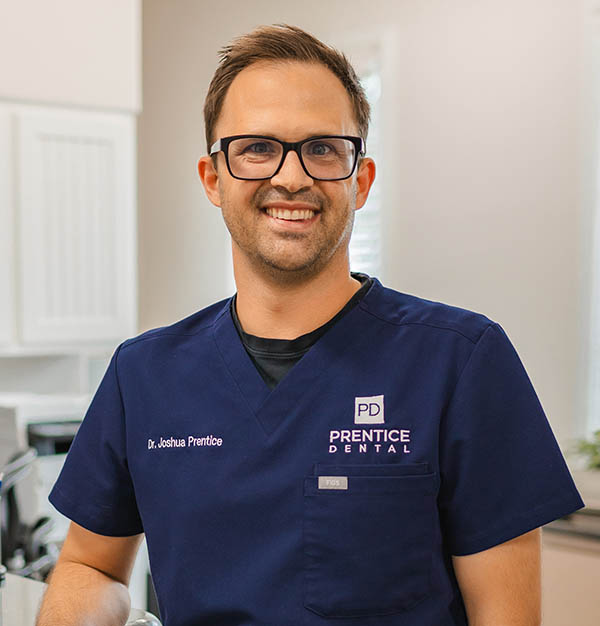
About Dr. Joshua Prentice
DDS, Kois Center Graduate with Honors
Dr. Prentice has completed advanced training at the prestigious Kois Center, one of dentistry's most respected institutions for comprehensive treatment planning and evidence-based care. He lectures nationally on complex restorative dentistry, digital workflows, and airway-centered treatment.
With over 15 years of experience in comprehensive dentistry, Dr. Prentice combines cutting-edge technology with evidence-based protocols to deliver predictable, lasting results for complex dental cases.
Related Articles
Schedule Your Comprehensive Evaluation
If you're experiencing significant tooth wear, schedule a comprehensive evaluation. We'll assess the extent of damage, identify the cause, and create a systematic treatment plan.
Or call us at (972) 539-6831