
Nano-Hydroxyapatite: The Future of Tooth Remineralization (What the Research Shows)
Understanding the science behind nano-HA, why it excels at treating sensitivity and erosion, and how it compares to traditional fluoride for enamel repair and maintaining restorative work
For decades, fluoride has been the gold standard for cavity prevention and enamel strengthening. But a newer technology—nano-hydroxyapatite (nano-HA)—is changing how we approach remineralization. Backed by extensive research and widely used in Japan for over 40 years, nano-HA offers unique benefits for sensitivity, erosion, and maintaining restorative work. Here's what the science shows.
What Is Nano-Hydroxyapatite?
Hydroxyapatite is the primary mineral that makes up tooth enamel and dentin—about 97% of enamel and 70% of dentin. Nano-hydroxyapatite is a synthetic version of this mineral, engineered at the nanoscale (incredibly tiny particles) to mimic the natural building blocks of teeth.
Why "nano" matters: The particle size (typically 20-80 nanometers) allows nano-HA to penetrate deep into enamel structure, filling microscopic defects and demineralized areas that larger particles can't reach.
How Does Nano-Hydroxyapatite Actually Work?
Quick Answer: Unlike fluoride which converts existing tooth mineral into a more acid-resistant form (fluorapatite), nano-HA physically deposits new mineral into tooth structure, filling defects and remineralizing damaged areas.
The Detailed Process:
- Application: Nano-HA particles in toothpaste, rinse, or professional treatment contact tooth surfaces
- Adhesion: Particles bind to enamel via electrostatic attraction and chemical affinity
- Integration: Over time, nano-HA integrates into existing enamel structure, filling defects and remineralizing demineralized areas
- Biomimetic repair: Because nano-HA is identical to natural tooth mineral, the body recognizes and integrates it seamlessly
Nano-HA vs. Fluoride: What Research Shows
Remineralization Effectiveness
Multiple studies show nano-HA remineralizes early enamel lesions as effectively as fluoride—sometimes more so:
- A 2019 meta-analysis found nano-HA toothpaste performed comparably to fluoride for preventing cavities
- Studies show nano-HA fills surface irregularities more completely than fluoride, creating a smoother, more acid-resistant surface
- Research indicates nano-HA continues working even after application, whereas fluoride's effect is more immediate and shorter-lived
Sensitivity Relief
Nano-HA excels at treating tooth sensitivity—often outperforming fluoride:
- Physically occludes (blocks) dentinal tubules that transmit sensitivity
- Clinical trials show significant sensitivity reduction within 2-4 weeks of nano-HA use
- Effects are long-lasting because particles integrate into tooth structure rather than just coating the surface
Safety Profile
Nano-HA has significant safety advantages:
- Non-toxic if swallowed: Safe for young children, pregnant women, and anyone concerned about fluoride ingestion
- No fluorosis risk: Cannot cause enamel discoloration from overexposure
- Biocompatible: Identical to natural tooth mineral, so the body doesn't react to it as foreign
Erosion Protection
For patients with acid erosion (from diet, reflux, or frequent vomiting), nano-HA offers unique benefits. It repairs eroded enamel surface texture, creating a more acid-resistant surface. Research shows it's particularly effective for protecting against erosion when used regularly.
CariFree and the Caries Management System
Dr. Kim Kutsch and the team at CariFree have pioneered a comprehensive caries (cavity) management system that incorporates nano-HA as a key component.
The CariFree Philosophy:
Cavities aren't inevitable—they're an infection caused by bacterial imbalance. CariFree's approach combines:
- pH balance restoration:Neutralizing acids and creating an oral environment hostile to cavity-causing bacteria
- Xylitol:A natural sugar substitute that cavity bacteria can't metabolize, starving them out
- Nano-hydroxyapatite:Actively remineralizing and repairing early damage
- Fluoride (when appropriate):Still valuable for high-risk patients, especially when combined with nano-HA
Clinical Applications: When I Recommend Nano-HA
1. Tooth Sensitivity
Patients with exposed root surfaces, post-whitening sensitivity, or generalized sensitivity often see dramatic improvement with nano-HA toothpaste and professional treatments.
2. Acid Erosion
For patients with GERD, frequent acid exposure from diet, or a history of eating disorders, nano-HA helps rebuild eroded enamel surfaces.
3. Post-Whitening Care
Professional whitening can cause temporary porosity in enamel. Nano-HA remineralizes these areas, reducing sensitivity and strengthening enamel post-treatment.
4. Maintaining Restorative Work
The margins around crowns, veneers, and fillings are vulnerable to decay. Nano-HA strengthens these areas and helps maintain the seal between restoration and natural tooth structure.
5. High Caries Risk Patients
Combined with the CariFree system, nano-HA is part of a comprehensive approach for patients prone to cavities—addressing the bacterial infection while simultaneously repairing and strengthening enamel.
6. Fluoride-Sensitive Patients
For those who prefer to avoid fluoride or have concerns about ingestion (young children, pregnant women), nano-HA provides effective remineralization without the risks.
How to Incorporate Nano-HA Into Your Home Care
Products I Recommend:
- CariFree 5000:High-concentration gel with fluoride and nano-HA for targeted remineralization
- CariFree Fluoride Free Gel with Nano-Hydroxyapatite:High-concentration fluoride-free option for targeted remineralization
- CariFree Naturals Fluoride Free Mouth Rinse:Daily use for fluoride-free remineralization and pH balance
- CariFree Naturals Fluoride Free Kids Toothpaste:Safe, effective nano-HA option for children
Usage: Most patients see results within 2-4 weeks of consistent use. For best results, apply after brushing and leave on teeth without rinsing.
The Future of Preventive Dentistry
Nano-hydroxyapatite represents a shift in how we think about cavity prevention—from simply making enamel more acid-resistant (fluoride's mechanism) to actively rebuilding and repairing tooth structure with bioidentical minerals.
This doesn't mean fluoride is obsolete—many patients benefit from combining both technologies. But nano-HA offers unique advantages for sensitivity, erosion, and patients seeking fluoride-free options. It's a tool I now consider essential in my preventive arsenal.
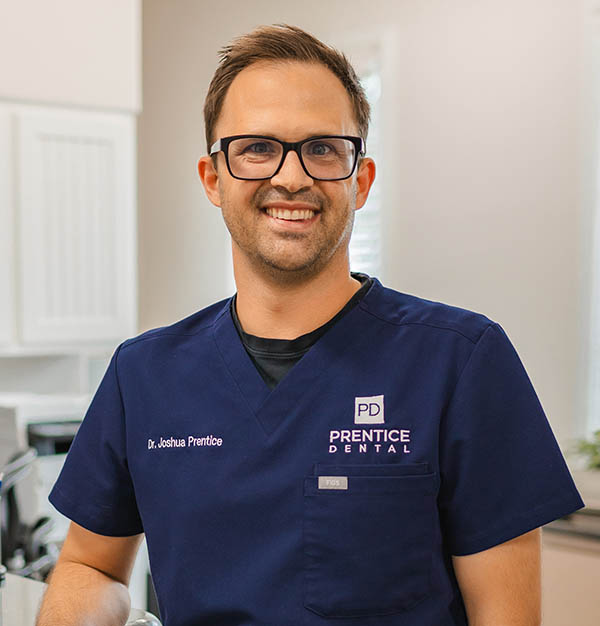
About Dr. Joshua Prentice
DDS, Kois Center Graduate with Honors
Dr. Prentice has completed advanced training at the prestigious Kois Center, one of dentistry's most respected institutions for comprehensive treatment planning and evidence-based care. He lectures nationally on complex restorative dentistry, digital workflows, and airway-centered treatment.
With over 15 years of experience in comprehensive dentistry, Dr. Prentice combines cutting-edge technology with evidence-based protocols to deliver predictable, lasting results for complex dental cases.
Related Articles
Ask About CariFree Nano-HA Products
Interested in exploring CariFree's fluoride-free nano-hydroxyapatite products for sensitivity, erosion, or cavity prevention? Schedule a preventive care visit to discuss which CariFree system is right for you.
Or call us at (972) 539-6831